
The haldi is the turmeric ceremony held on the wedding day or the day before. It is short, joyful and messy, and it is easy to underplan because it looks simple. Getting it right comes down to five things: the right time slot, a space that is allowed to get yellow, a paste that is safe for the couple's skin, a guest list that stays small, and a plan for cleaning up.
We have planned two of these for our own daughters. Our older daughter's haldi was a pool event. Our younger daughter's was held at the hotel, built around games and fun activities. Below is what we would tell any couple planning theirs.
What is a haldi ceremony?
At a haldi, the couple's closest family and friends apply a paste made mainly of turmeric to the bride's and groom's faces, arms and legs. Turmeric is considered auspicious and is linked with prosperity and a glowing complexion, and the ritual is meant to bless and prepare the couple before the wedding.
- The paste. Turmeric mixed with a liquid such as yogurt, milk, cream or rose water. Many families add gram flour, and some add sandalwood. In the Punjabi version, called maiyan or vatna, the paste traditionally uses turmeric, flour and mustard oil.
- The names. Depending on the region and family, you will hear it called haldi, pithi, maiyan, vatna, ubtan, tel baan or, in Bengali weddings, gaye holud. The core of the ritual is the same.
- Who comes. It is an intimate event, closer in size to a rehearsal dinner than a reception: immediate family and close friends.
- The colours. Yellow and orange are traditional, because the turmeric will end up everywhere. Some couples now choose pink, green or other jewel tones.
- The mood. Dhol drums or a playlist, dancing, flower showers and a lot of laughter.
Traditionally, the bride and groom each have their own haldi with their own families, often at home. At a destination wedding you may choose one shared event instead. Decide this early, because it changes the guest list, the space you need and the photographer's schedule.
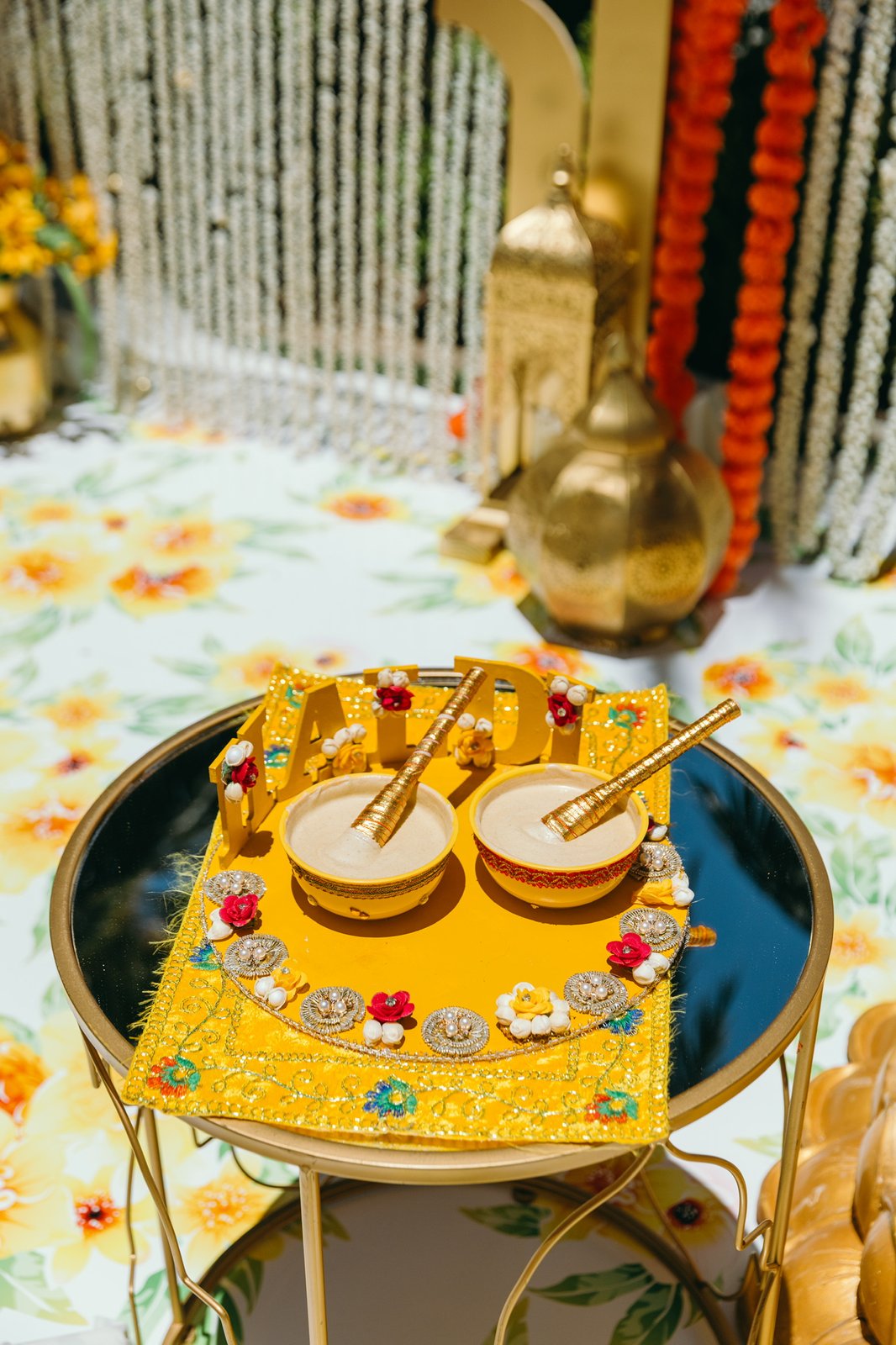 Photo by Amber Rain
When to hold it
- The day before the wedding is the most common slot. Some families hold it on the morning of the wedding, which leaves little room if anything runs late.
- Plan for one to two hours of ceremony, then time for the couple to wash, rest and change. At a destination, a common schedule puts the mehndi in the morning, the haldi in the afternoon for family and close friends, and the sangeet that evening.
- Morning or late-afternoon light photographs best. Scout the space for the strongest natural light, because the light can change from bright to dim within one event.
How to plan a haldi, step by step
- Choose the format and the space. At home, by a pool, on a hotel terrace or lawn, or in a garden. Pick somewhere that can be covered, hosed down or tarped, with showers close by. Our haldi decoration ideas cover each setting.
- Set the guest list. Keep it to the people who will actually apply the paste, plus the family who want to watch. A haldi that quietly becomes a second party costs more and is harder to manage.
- Get the venue's rules in writing. Ask whether turmeric is allowed, where, and whether it is allowed in or near the pool. Ask about cleaning or damage charges, whether they supply tarps and seat covers, and whether outside decorators or musicians pay a fee.
- Choose the paste and test it. Agree the recipe with the family elders. Do a patch test on the couple's skin a few weeks ahead, and talk to the makeup artist about avoiding yellow staining before the wedding look.
- Book the vendors. A decorator for the setup, dhol or a DJ, and a photographer who has covered haldis before. Turmeric reaches cameras too, and experienced photographers protect their gear and know where to stand.
- Plan the outfits. The couple wears something they are happy to stain. Ask guests to wear yellow, orange or green, or older clothes, and to avoid white. Put this on the invitation insert so nobody arrives in their best silk. More in our guide on what to wear to a haldi.
- Plan food and drink. A brunch or light lunch suits the time of day. Turmeric-inspired drinks and mocktails are a popular touch.
- Plan the cleanup. Tarps and disposable seat covers, plenty of towels, wipes, a rinse area or showers nearby, and a small stain kit for outfits.
What goes wrong at a haldi
- The venue stains, and a bill follows. Turmeric paste marks everything it touches. Tarps are essential, and experienced resorts supply tarps and seat covers. Ask before you assume.
- Cleaning the wrong way makes it worse. Hot water and heat set turmeric stains. Acids such as vinegar or lemon can etch natural stone like marble. Blot, use cold water first, and use mild dish soap or a baking soda paste.
- Skin reacts. Turmeric can cause allergic skin reactions. Heat, sweat and friction can make reactions worse, and curcumin, turmeric's active compound, may make skin more sensitive to sunlight. That matters for an outdoor or poolside haldi in the midday sun, so patch test and plan shade.
- Outfits are ruined. Turmeric spreads further than people expect and is hard to get out of fabric; photographers treat it as permanent. The guest in white is the one who regrets it.
- The schedule squeezes. The haldi runs long, the couple needs time to wash it off, and the mehndi or sangeet starts on time anyway. Leave a real gap.
- The photographer's hours run out. If your photographer's contract covers the evening events, check whether it also covers an afternoon haldi.
- The fine print adds up. At resort weddings, extra events, outside vendors and custom decor are often charged on top of the package. Expect roughly $1,000 to $3,000 in venue fees per extra event, $500 to $1,500 per outside vendor per event per day, and $2,000 to $8,000 for custom decor. Read each contract for these lines before you sign.
- The weather turns. An outdoor haldi needs shade or a covered backup space, booked in advance.
Haldi ideas: choosing a format
A pool haldi
This is what we did for our older daughter. A pool turns the haldi into an easy, playful event: the paste goes on, and washing it off becomes part of the fun.
- Confirm in writing that the venue allows turmeric in or near the pool, and what any cleaning or closure would cost.
- Plan shade, sunscreen, towels and a rinse area. Outdoor sun plus turmeric is the combination to patch test for.
- Choose breezy outfits that can get wet, and tell guests to bring a change of clothes.
- Keep the ritual itself on a tarped deck or lawn beside the pool, then move into the water afterwards.
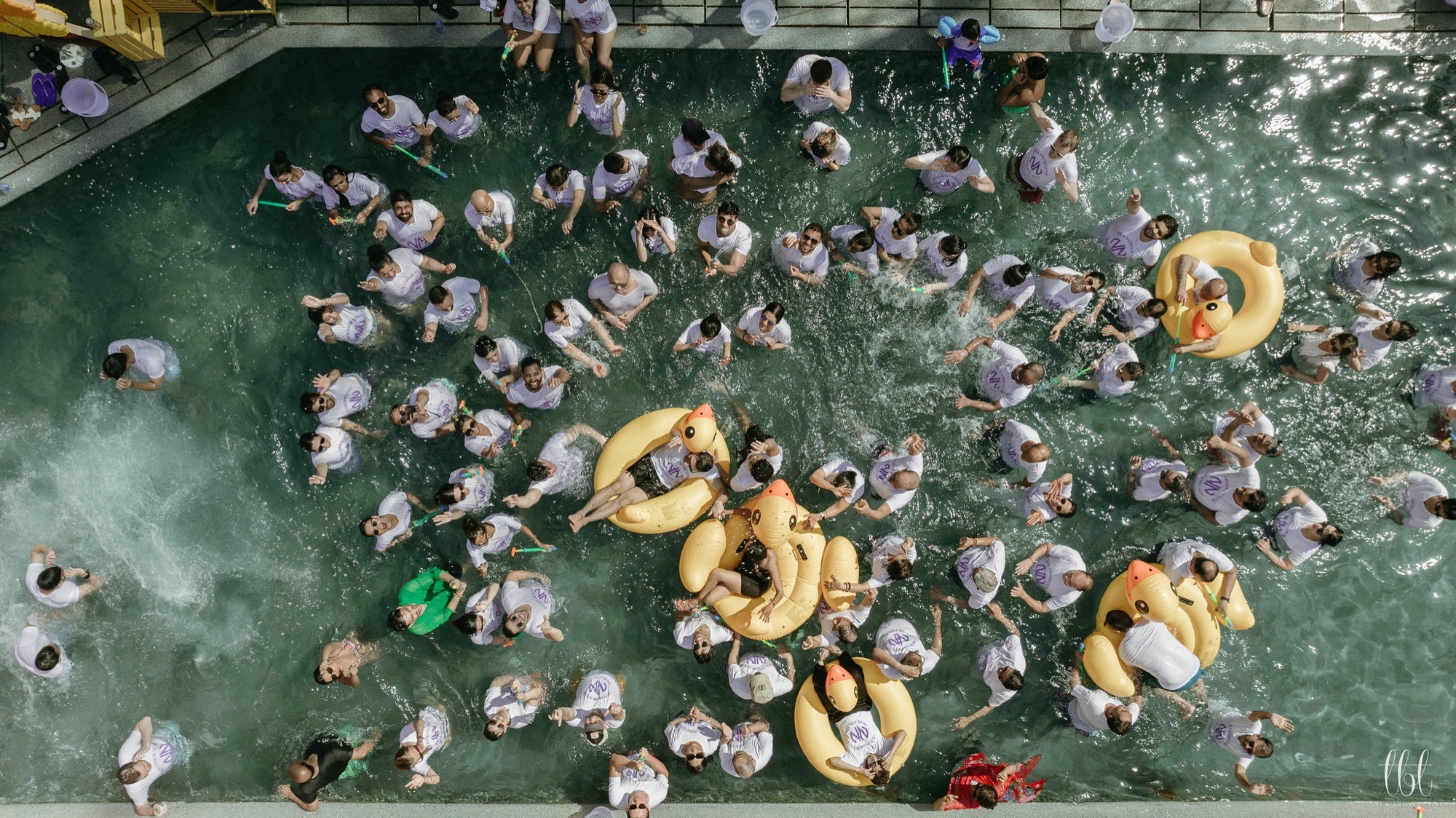 Photo by The Blemished Tales
A hotel haldi with games
This is what we did for our younger daughter: a hotel event built around games and fun activities. It suits a mixed crowd and gives the ceremony shape, so guests are not just standing and watching. Ideas couples use:
- A dance-off between the bride's and groom's sides.
- A tug of war between the two families, with the losing side splashed with turmeric water.
- Couple trivia, with funny and heartfelt questions about the bride and groom.
- A wishes bowl, where guests drop written wishes into a bowl of turmeric for the couple to read later.
- A turmeric handprint canvas that doubles as a guestbook and a keepsake.
Ask the hotel which rooms or terraces allow turmeric, and keep the paste and the games in the same covered area.
At home or in a garden
The traditional choice: each family hosts its own haldi at home, in a courtyard or a garden. It is the most intimate format and the easiest to keep small. Marigold garlands, yellow drapes and a decorated seat for the bride or groom are usually all the decor it needs.
On a terrace or beach at a destination
Resorts often offer a private terrace, garden or beach cabana for the haldi. Check the shade, the distance to the nearest showers, and when the space must be reset for the next event.
A haldi checklist
The short version is below. The full, printable checklist sorts every step by when it needs doing: download the haldi checklist (PDF) or open it on the site.
- Decide: separate or shared haldi, and the format.
- Book the space, and get turmeric, pool and cleaning rules in writing.
- Set the guest list and send the dress note on the invitation.
- Agree the paste recipe and patch test it.
- Book decor, music and a photographer whose hours cover the haldi.
- Buy tarps, seat covers, towels and a stain kit, or confirm the venue supplies them.
- Leave a gap in the schedule for washing off before the next event.
- Plan shade and a covered backup for an outdoor haldi.
Where DoDeewane fits
We make DoDeewane, a planning tool for multi-day Indian weddings, and the haldi is a good example of why we built it. It is a small event with its own guests, vendors, outfits, rules and timing, sitting a few hours away from the mehndi and the sangeet. Here is how DoDeewane keeps it simple.
- The haldi is its own event. It has its own date, venue, timings and run-of-show, side by side with every other function on one timeline.
- It has its own guest list. Invite only the people who belong at the haldi, and the headcount for food and seating follows the RSVPs.
- Contracts are read for you. Upload the venue, decor or photographer contract. The true total, including service charges and outside-vendor fees, goes into the budget, and payment dates become reminders.
- Gaps show up early. A photographer whose hours end before the haldi, or a decor reset that collides with the next event, is flagged weeks ahead.
- Tasks have owners. Who confirms the pool rules, who buys the tarps, who brings the paste. Everyone sees what is theirs.
- Outfits are planned per function. What each person wears to the haldi, so the yellow outfits are sorted long before the trip.
We are admitting ten founding couples with weddings after April 2027.
Sign up to receive an invitationMore on the haldi and other functions
- What to wear to a haldi ceremony
- Haldi decoration ideas
- How to plan a mehndi ceremony
- How to plan a sangeet
- The printable haldi checklist
Frequently asked questions
How long does a haldi ceremony last?
Plan for one to two hours for the ceremony itself, plus time afterwards for the couple to wash off the paste and change before the next event.
Can the bride and groom have a joint haldi?
Yes. Traditionally each family holds its own, but at a destination some couples choose one shared event. Decide early, because it changes the guest list, the space and the photography plan.
What should guests wear to a haldi?
Yellow, orange or green, or older clothes they do not mind staining. Avoid white, because turmeric shows most on it and is hard to remove.
What is haldi paste made of?
Turmeric mixed with yogurt, milk, cream or rose water, often with gram flour and sometimes sandalwood. Punjabi families traditionally use turmeric, flour and mustard oil. Patch test whatever recipe you choose.
Is a pool haldi a good idea?
It can be a lot of fun, as it was at our older daughter's wedding. Confirm in writing that the venue allows turmeric in or near the pool, plan shade and a rinse area, and patch test the paste if the event is in the sun.