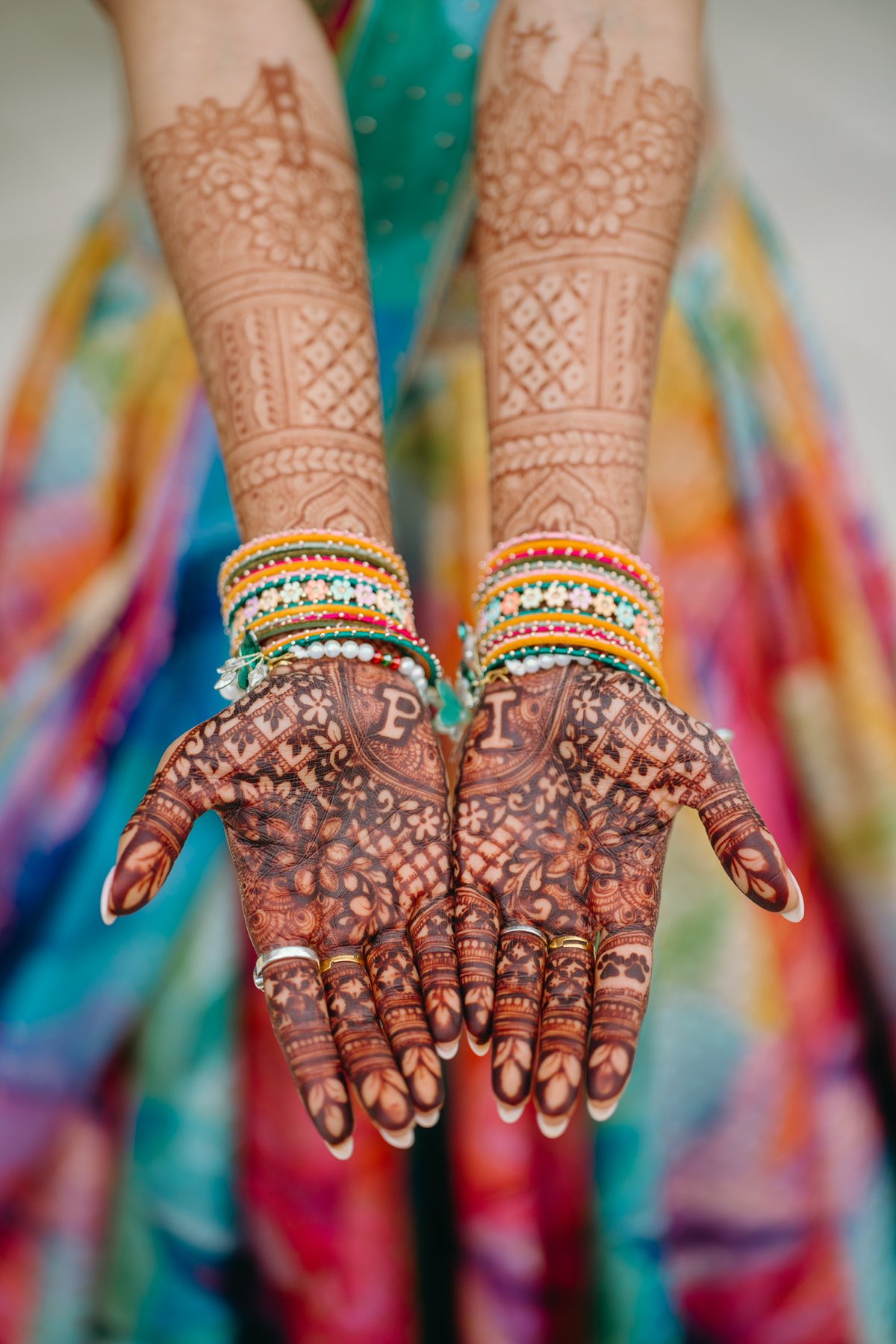
The mehndi is the henna ceremony, usually held one to three days before the wedding. It is relaxed and social, but three decisions make or break it: when the bride's henna goes on, how many artists you book for guests, and whether the paste is real henna. Get those right and the rest is music, food and good company.
What is a mehndi ceremony?
Mehndi is a temporary brown stain made from a paste of crushed, dried henna leaves. The mehndi ceremony is a pre-wedding event at Hindu and Muslim South Asian weddings, and the stain stands for a happy marriage and good luck.
- The bride's design usually runs from the hands to the elbows and from the feet to the calves.
- The groom's name or initials are often hidden in the design for him to find later.
- A darker stain, the folklore goes, means more love from the groom. Some families say from the mother-in-law.
- The groom gets henna too in some communities, usually a small design on the palms.
- Guests were traditionally limited to the bride and close female relatives. Today many brides invite the wedding party and guests to get henna as well.
Customs vary. At many Hindu weddings the mehndi is hosted by the bride's side, and at some Muslim weddings the bride arrives already hennaed.
When to hold it, and how long it takes
- Days before the wedding: families differ, from the night before to two to four days before. Most choose one to three days.
- The bride's application takes two to six hours. Hands alone take about one and a half to two and a half hours, to the elbow four to five, and feet add one to two more.
- The paste stays on for at least four to six hours, and overnight is common.
- The stain starts orange when the paste comes off, then darkens over the next one to three days. It lasts one to three weeks, darkest on the palms and soles.
That is why timing matters. Too close to the wedding, and the stain has not darkened. Too early, and it has started to fade.
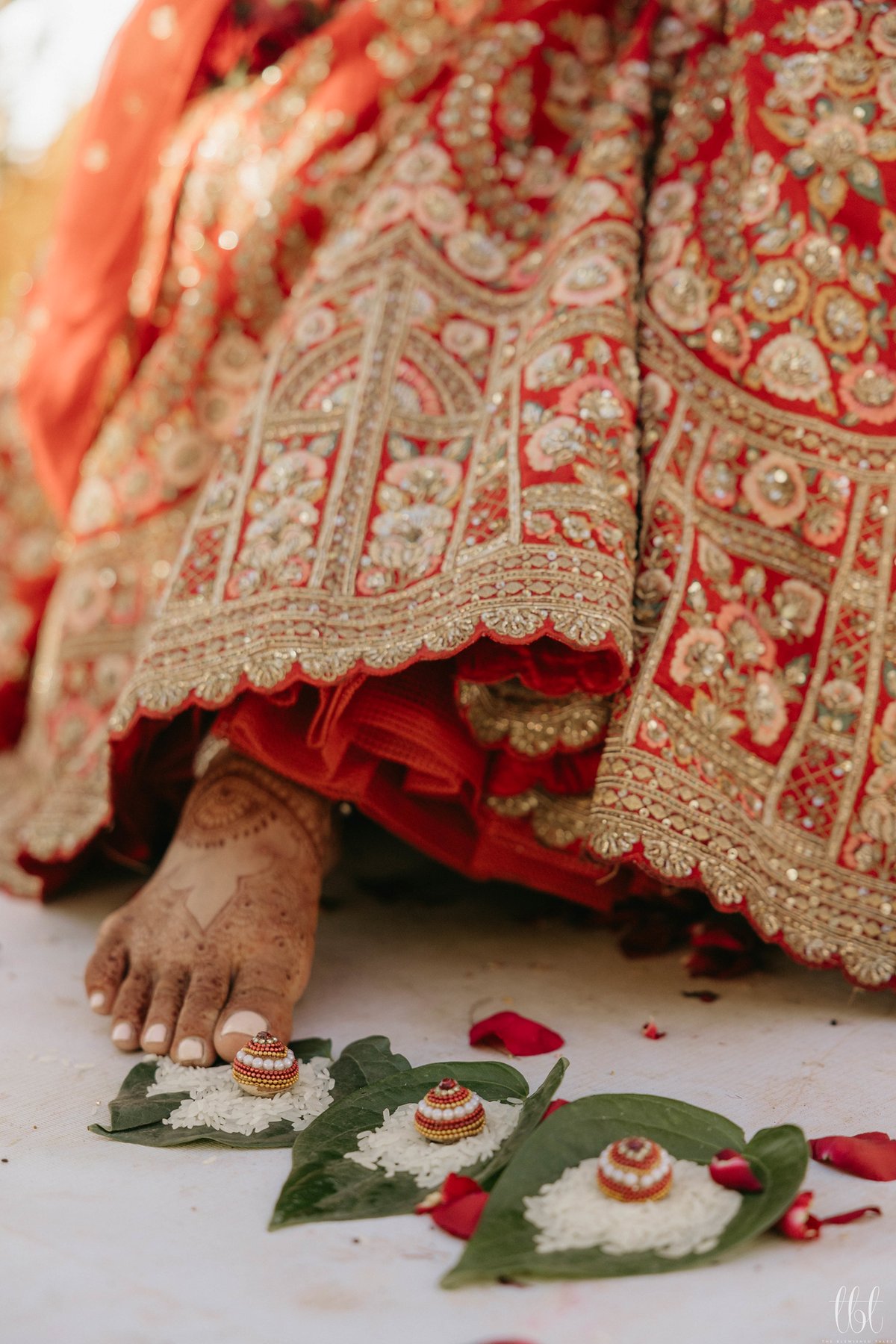 Photo by The Blemished Tales
Henna safety: avoid "black henna"
This is the part not to skip.
- The US Food and Drug Administration has approved henna only as a hair dye. Using it on skin is not an FDA-approved use.
- "Black henna" often contains PPD, a chemical from hair dye. PPD is not allowed in products for the skin and can cause serious reactions.
- Hundreds of cases have been reported, from rashes to blistering and scarring. A single exposure can cause a lifelong PPD allergy, which can also make hair dye unsafe later.
- Artist-applied paste does not need an ingredient label, so ask the artist exactly what is in it. If they cannot tell you, do not use it.
- Warning sign: paste that stains black within about 30 minutes. Blisters can appear 3 to 12 days later.
- Allergy to pure henna is very rare. Mild reactions usually come from added lemon or oils.
- Henna is not safe for everyone. People with G6PD deficiency, an inherited enzyme condition, should avoid it, and the risk is greatest for infants and children. Check before children get henna.
We know of no official patch test for henna. Some artists offer a consultation with a small sample design, which is a sensible way to check the paste and the artist before the wedding.
How to plan a mehndi, step by step
- Book the bridal artist early. In peak season, good artists book six to nine months ahead and take a 30 to 50 percent deposit. For a destination wedding, give at least three to six months' notice.
- Put the details in the contract: arrival time, how many artists, hours, the overtime rate and travel fees.
- Decide who gets henna. At mixed events, expect about half to 60 percent of guests to take henna, and closer to 90 percent at all-women events.
- Book enough artists for guests. Each artist does roughly 8 to 15 simple designs an hour. For example, with 80 guests and about half taking henna, that is around 40 designs: two artists for two to three hours.
- Plan the order of the day. A good order is the bride in the morning, the bridal party in the afternoon and guests in the evening.
- Set up for comfort. A low cushioned seat for the bride, comfortable seating for guests, bright warm light, and shade outdoors.
- Plan music, food and decor. Music, dancing and a meal are close to standard. Marigolds, umbrellas, lanterns and a swing for the bride are common decor.
- Choose outfits. Brides often wear a bright colour different from the wedding outfit. Guests should wear short sleeves so henna can go on the hands and arms.
At a destination
- Check the resort package. Some Mexico resort packages include a henna artist, some cover the bride only, and some exclude henna.
- Ask about outside vendors. Resorts often have rules and fees for vendors you bring in.
- Budget for a travelling artist. For events three or more hours away, artists may require a two-day booking plus three hotel nights.
Aftercare for a dark stain
- Dab a lemon-and-sugar mix on the dried paste, lightly. Too much makes it run and smudge.
- Scrape the paste off; do not wash it off.
- Keep the hands out of water for 12 to 24 hours, and avoid chlorinated pools and scrubs.
- Keep warm. Cold hands can give a lighter stain.
What goes wrong at a mehndi
- Too few artists show up, and guests end up queuing for hours. The usual cause is a contract that never names the team size, so put the number of artists in writing and confirm it the week before.
- Smudges. Touching wet paste ruins the design, and a slow artist can stretch the bride's session well past four hours.
- The timing is off. Henna the night before only works with a very experienced artist. Too early, and the stain fades before the wedding.
- Cold weather. A henna cone can even freeze at an outdoor event in November. Heat the space or move indoors.
- Black henna. See above. It is the one mistake with lasting consequences.
Mehndi formats
- An intimate mehndi at home or a relative's house, for the bride and close family.
- A daytime mehndi at a spa, at home or in a rental.
- A mehndi party with music, food and henna stations for guests.
- A combined mehndi and sangeet, which is common: henna in the afternoon, performances at night.
- A resort mehndi, often about three hours in destination packages, sometimes combined with the sangeet.
What mehndi costs
US prices vary widely, so ask for quotes.
- Bridal henna: about $100 to $150 for hands to the wrist, $250 to $500 or more for hands and feet, and $700 to $1,000 for luxury work. Some artists charge about $110 to $120 an hour.
- Guest henna: quotes range from about $70 to $110 an hour to $160 to $320 an hour for most professional artists. Some charge $5 to $15 a guest plus a booking fee.
- Minimums and travel: two-hour minimums are common, and some artists charge mileage beyond a set distance.
A mehndi checklist
The full, printable version sorts every step by when it needs doing: download the mehndi checklist (PDF) or open it on the site.
- Book the bridal artist, and confirm the paste is natural henna.
- Decide which guests get henna, and book enough artists.
- Choose a date one to three days before the wedding.
- Block two to six hours for the bride, plus drying time.
- Plan seating, light and shade, music, food and outfits.
- Confirm the artist team the week before.
Where DoDeewane fits
We make DoDeewane, a planning tool for multi-day Indian weddings. The mehndi touches almost every other function: it sits a day or two before the wedding, often shares a day with the haldi or sangeet, and depends on vendors who are booked by the hour.
- The mehndi is its own event, with its own date, venue, timings and run-of-show, alongside every other function on one timeline.
- It has its own guest list. Invite the right people, and the headcount for food and henna follows the RSVPs.
- Contracts are read for you. Upload the henna artist's or resort's contract, and the hours, overtime rate and travel fees go into the budget, with payment dates as reminders.
- Gaps show up early. An artist booked for fewer hours than the guest list needs, or a mehndi that runs into the next event, is flagged weeks ahead.
- Outfits are planned per function, so the mehndi outfit is sorted along with everything else.
We are admitting ten founding couples with weddings after April 2027.
Sign up to receive an invitationMore on wedding functions
Frequently asked questions
How many days before the wedding should mehndi be done?
Usually one to three days before. The stain darkens over one to three days after the paste comes off, so very late application risks a light stain on the day, and very early risks fading.
How long does bridal mehndi take?
Two to six hours, depending on the design. Hands alone take about one and a half to two and a half hours, and adding arms and feet takes longer.
How many henna artists do I need for guests?
Plan on each artist doing roughly 8 to 15 simple designs an hour. Estimate how many guests will want henna (about half at mixed events) and divide by the hours you have.
Is black henna safe?
No. "Black henna" often contains PPD, which can cause serious skin reactions, and a single exposure can cause a lifelong allergy. Use natural henna only, and ask the artist what is in the paste.
How do I get a dark mehndi stain?
Leave the paste on for at least four to six hours, dab on a little lemon-and-sugar, scrape rather than wash it off, keep your hands warm, and avoid water for 12 to 24 hours.